|
T of C
Home |
My Work |
Hand- books |
Qin as Object |
Qin in Art |
Poetry / Song |
Hear, Watch |
Play Qin |
Analysis | History |
Ideo- logy |
Miscel- lanea |
More Info |
Personal | email me search me |
| Qin toad / Taiyin Daquanji (numerous illustrations) / Facebook collection | 首頁 |
|
Guqins in Art and Illustrations
1
See also Art for qin melodies |
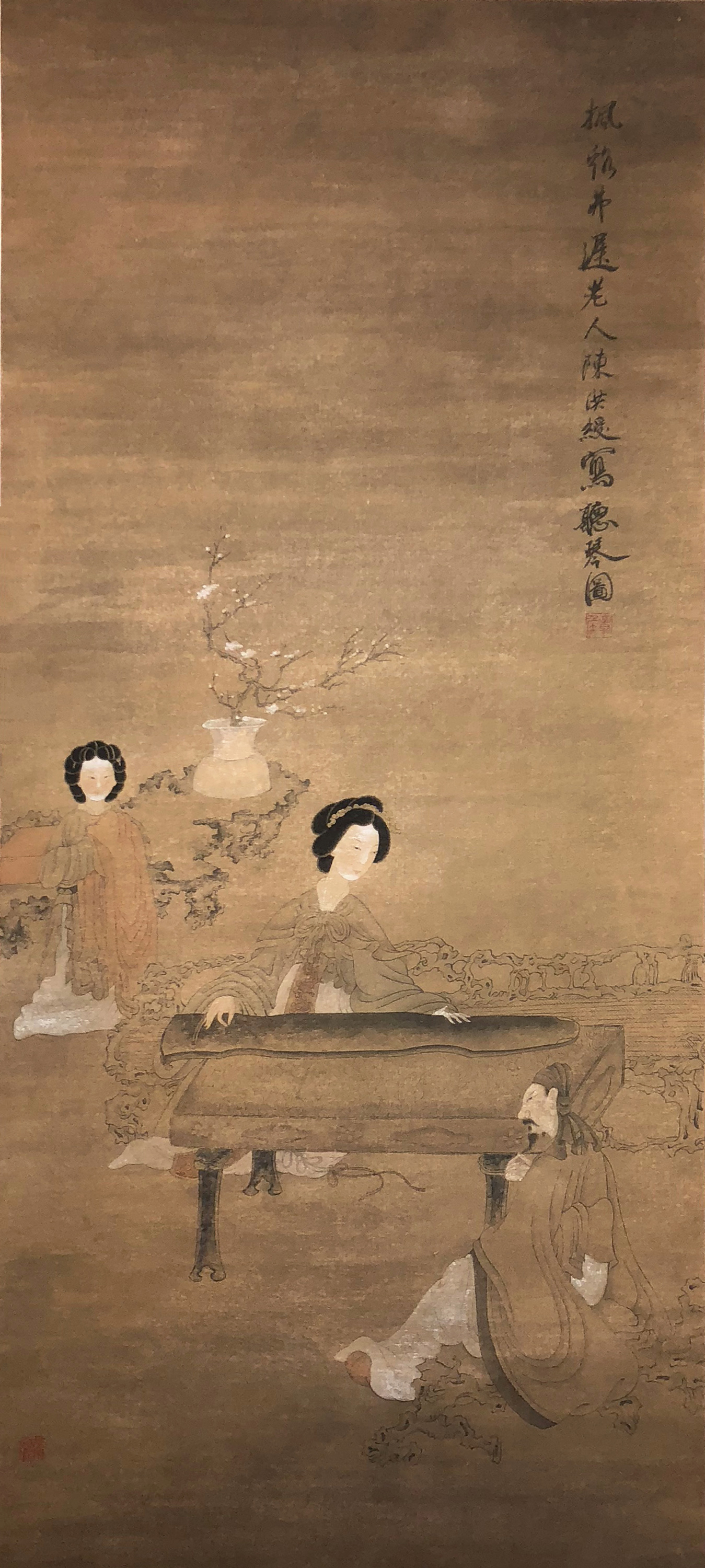
Listening to Qin 2 |
The qin was the music instrument most depicted by Chinese literati. It was also commonly depicted in popular art. This page has links to a number of examples, but perhaps the best generally available collection is on a Facebook page compiled and maintained by 伏見无家 Muka Fushimi.
Here are links to some examples on this website:
- Two paintings, #1 and #2, both called 楊子華北齊校書圖 Northern Qi scholars collating classical texts, by Yang Zihua.3
- Methods of playing the qin
The qin can be played either on the lap or at a table - Qin styles
Annotated illustrations of 38 famous qin shapes - Using the qin when teaching
Illustrations showing teachers with qins do not necessarily show them teaching qin - Hand Gesture Illustrations
33 annotated illustrations of finger techniques - Lienü Zhuan and Liexian Quanzhuan
Illustrated editions of both include depictions of people with qin connections - Emperor Huizong playing the qin
Perhaps the earliest painting showing the qin played at a table - Feng Qiu Huang
(A Phoenix Seeks his Mate);
a famous Chinese love story involving seduction by qin. - Autumn Geese over the Grave of the Immaciated Immortal
A modern painting from photos at the grave - Boya plays for a friend
A scene often imitated - Private Conversation by a Pine Tree
More recent depiction of playing qin for a friend - Qin and books
An expression characterising the interests of a gentleman. - Playing a stringless qin
Echoes an idea expressed Tao Yuanming - Qin and ruan lute
The qin also sounds good with Western lute. - Korean examples
Compare with Korean paintings of komungo


| Footnotes (Shorthand references are explained on a separate page) | Inscription |
1.
Art with Qin
Illustrations on this site come from own own collection whenever possible. Much is downloaded from the internet, and whenever possible I have tried to find out the present location/ownership of the originals. However, this is sometimes difficult. There are also some that are quite curious, such as this dinner plate, the source of which is very circuitous.
(Return)
2.
Listening to the Qin
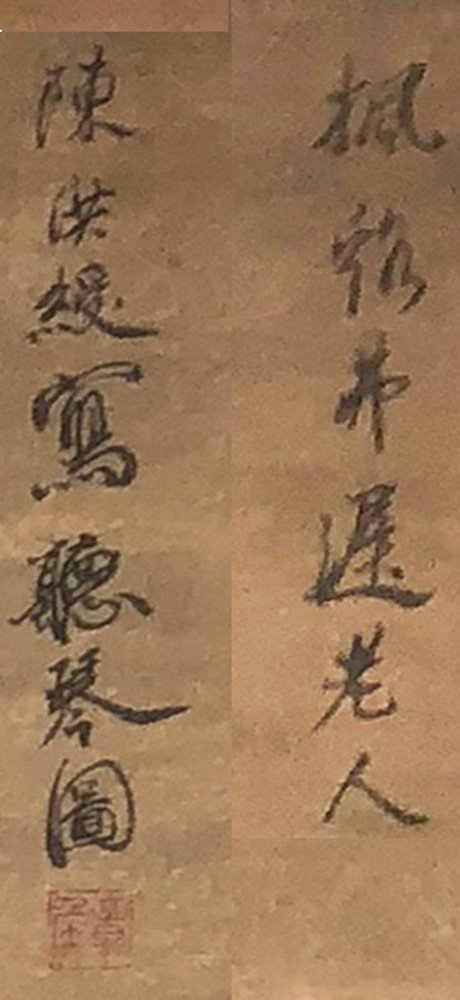
The inscription (closeup) on the painting to the right says (the second character is actually not clear)
"楓溪弗遲老人陳洪綬寫聽琴圖", suggesting that it is an "illustration by
Chen Hongshou of listening to the qin"; in fact it is a modern painting by
Bai Yunli in this style
(Return)
3
楊子華北齊校書圖 Northern Qi scholars collating classical texts, by Yang Zihua:
Two paintings, #1 and
#2
Northern Qi was 550 to 577 CE, but the paintings more likely date from the Song dynasty. It is not clear if there was originally one painting on this theme and these are two later interpretations, or if from the beginning there was more than one painting on this theme.
(Return)
Return to the Guqin ToC.