|
T of C
Home |
My Work |
Hand- books |
Qin as Object |
Qin in Art |
Poetry / Song |
Hear, Watch |
Play Qin |
Analysis | History |
Ideo- logy |
Miscel- lanea |
More Info |
Personal | email me search me |
| Mumbai Singapore Cheung Chau | 首頁 |
|
From Hong Kong to New York
1
(or Cheung Chau to Weehawken) |
從香港遷居紐約
(或者長洲島遷居威豪墾[韋哈根]) |
The South China Sea from my old Cheung Chau residence
 |
Manhattan from the bluff near our new home in Weehawken
 |
At our wedding
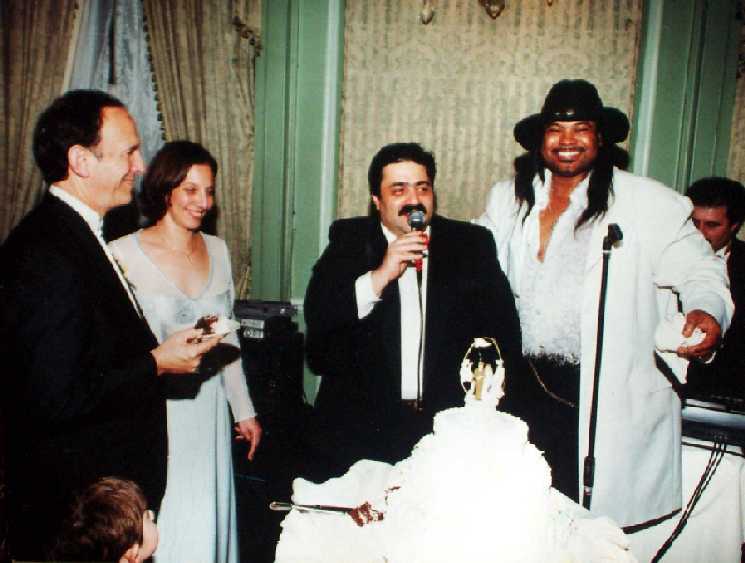
On 6 January 2001 Suzanne Goldstein Smith and I were married at Temple Israel in New York City.2 Before the service there we heard Celebratory Ashkenazic and Sephardic Music from the European Jewish Tradition; at the party afterwards music was provided by Albert Narkolayev and his Mazel Tov Band.3 I had heard Albert playing with his band (then called Shalom Aleichem) at a Muslim wedding in Dushanbe, Tajikistan, in 1991 (HKFAA trip).
I had actually gone to Dushanbe to meet Barno Itzhakova (Wiki) once considered the finest living singer of traditional Bukharian maqam. However, with the breakup of the Soviet Union things were becoming very difficult for the rather large Jewish community there. When we met Albert told me of his plans to come to New York. I was very skeptical, but within a year he had made it. He remembered our meeting from 10 years earlier, and for our wedding the 2001 version of his band, which had three members from his Dushanbe group, played traditional and modern Central Asian music as well as popular Western standards.
In May 2001 Suzanne and I moved to Weehawken, New Jersey.4 From our home there it is a 15 minute walk along and down the New Jersey Palisades to the Port Imperial Pier, from which one can take one of the (spectacular but increasingly expensive) New York Waterways ferries across the Hudson River, 7 minutes to the 38th Street Pier in mid-town, or 15 - 30 minutes to the World Financial Center or Pier 11 by Wall Street. (Unlike in Cheung Chau, one can also go by bus, which outside of the rush hours takes 10 minutes to Port Authority Bus Terminal).
From May 2009 to October 2013 we were back in Asia (Mumbai then Singapore). We then returned to Weehawken but still maintain an Asian base back in Cheung Chau.
Footnotes (Shorthand references are explained on a
separate page)
1.
Move to New York
And I joined the newly-formed New York Qin Society.
(Return)
2.
Wedding
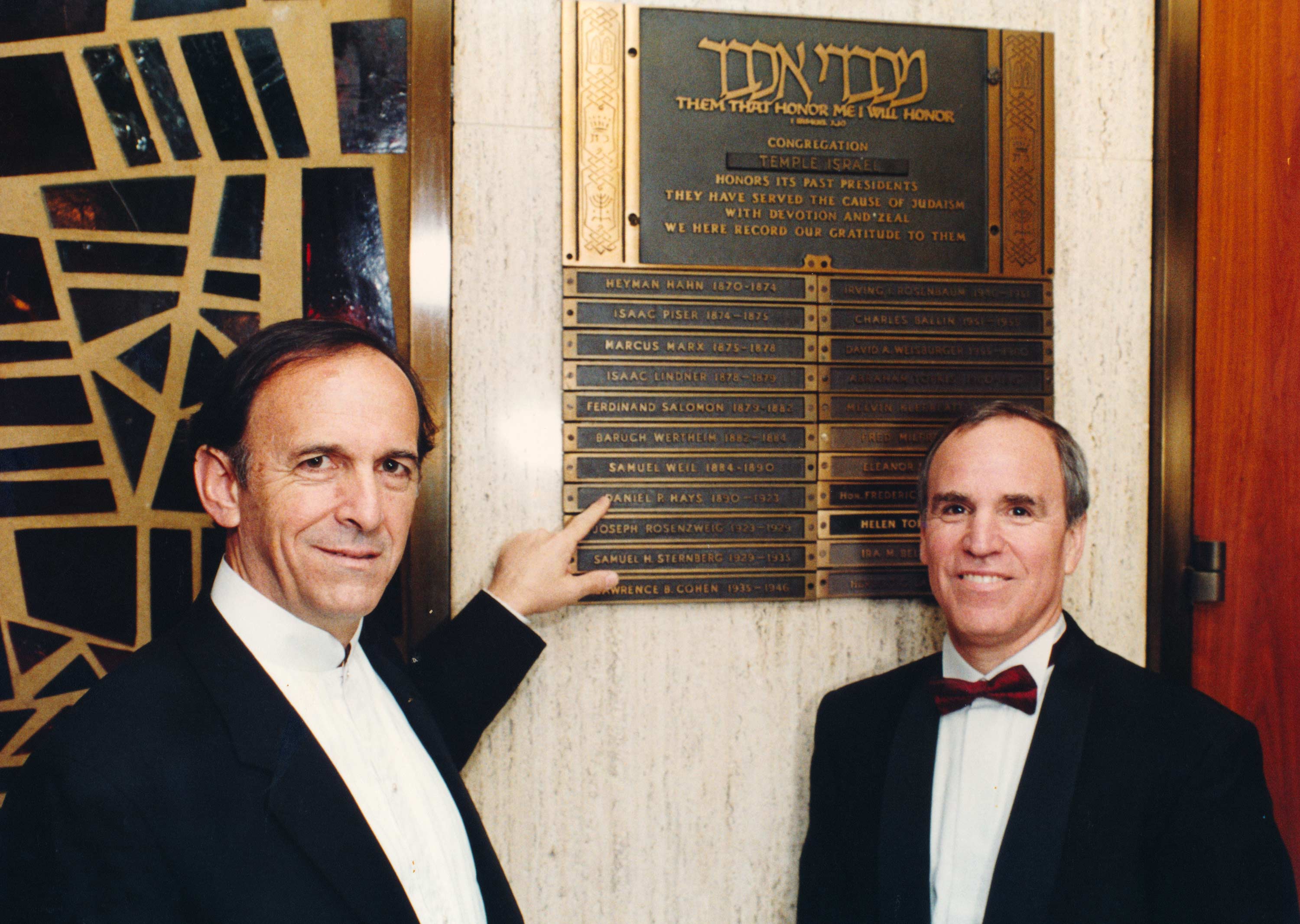
At Temple Israel, of which my great-grandfather had been president from 1890 to 1923 (when it was in Harlem).
(Return)
3.
Albert Narkolayev and his Mazel Tov Band
Many video clips of Albert and his band can be found online, including ones from a tour back to Dushanbe. The music they normally play is generally called "Bukharian". Many of the leading musicians in this style were Jewish, and Bukhara (now in Uzbekistan) had the oldest Jewish community in Central Asia (some claim the world, dating it to the Babylonian Captivity
[Wiki]). There is some discussion of this music online, though as of 2010 the entry "Music" under the Wikipedia article Bukharan Jews confused this popular genre with one of its sources, the traditional form called Shashmaqam (Wiki). See also Ted Levin (Wiki), 100,000 Fools of God: Musical Travels in Central Asia (Indiana University Press, 1999). In 2010 Ted wrote me that it had become "common...for Bukharan Jewish musicians from the communities in New York and Tel Aviv to return to Central Asia to perform at big weddings (very prestigious for the families) and state-sponsored festivals (demonstrates the continuing grip of the Motherland on the diaspora)...."
(Return)
4.
Weehawken, New Jersey
See Weehawken History (and Time Machine), the Township of Weehawken,
and this NY Times about a valuable nearby cliffside property, as well as Wikiwand (Weehawken Public Library) and Wikipedia (Weehawken).
(Return)
Return to personal matters or to the home page