|
T of C
Home |
My Work |
Hand- books |
Qin as Object |
Qin in Art |
Poetry / Song |
Hear, Watch |
Play Qin |
Analysis | History |
Ideo- logy |
Miscel- lanea |
More Info |
Personal | email me search me |
| Ideology Playing for an imaginary one Playing qin for an ox | 首頁 |
|
Playing Qin in Nature
Musing on a well-known concept 2 |
對林泉撫琴
1
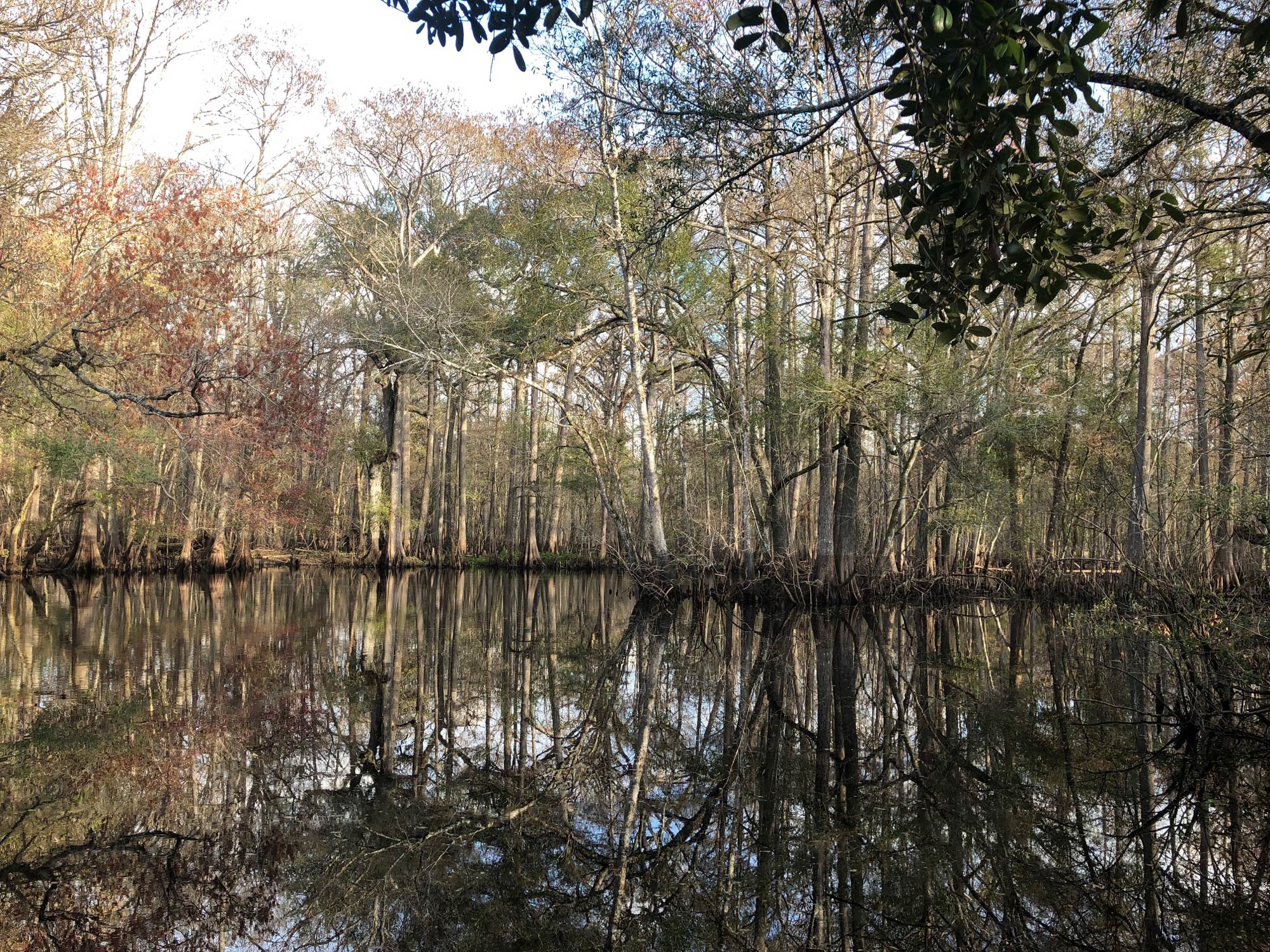
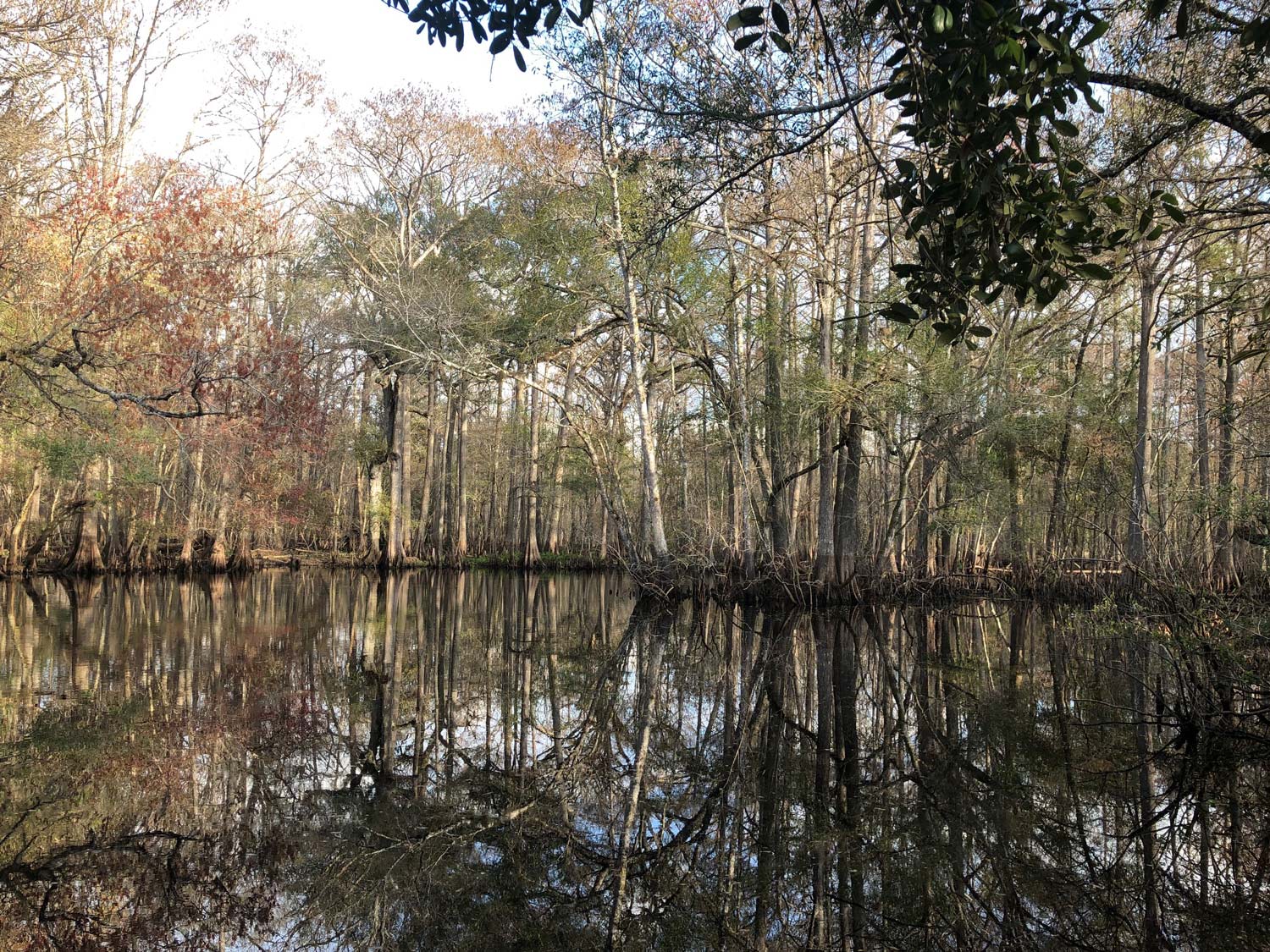
By the Withlacoochee Nature Trail, Florida (expand) 3 |
Subtle Beauty
Once while bicycling on a nature trail in central Florida, as my brother Dan and I got off our bikes to walk down a side trail and look at a creek, we met a couple coming out. I asked: "What is it like?" The guy said, "It’s OK." "Just OK?" I said. He responded, "We are from the Pacific Northwest", obviously referring to its mountain scenery. My brother, who lives in Florida, said, "You should learn to appreciate Florida’s subtle beauty". We went on to the creek, and it indeed was imbued with a marvelous but subtle beauty enhanced by the quiet sounds of nature.
As we stood at the creek admiring the flat wetlands I could not help but compare the quiet beauty of the landscape with the beauty of the sounds that should come from the music instrument I play, the Chinese silk string guqin zither. The sun was shining through the trees and reflecting off the water; the near silence was broken only by the occasional sound of a bird. We also were silent, occasionally whispering; nothing else was needed. This is the way I feel about guqin music at its essence.
Knowing of the tradition of playing guqin in nature, my brother said, "A perfect place to play guqin."
This was true. At the same time, though, with such natural beauty, how could any music improve it? So listeners should instinctively wish to be quiet because they are experiencing nature, or because they are listening to a personal communication with nature rather than being entertained by a musician. As for me, I felt quite as happy just appreciating the beauty of nature, then letting this inspire me the next time I went to my quiet studio at home.
So it was with Chinese painters. They would go walking in nature, but then go home to their studios to paint their impressions of the experience.4
Guqin music is the sound of nature. As has been written, "Wind in the pines and a babbling brook are nature's melody. A qin has been brought along, but there is no need to play it."
Footnotes (Shorthand references are explained on a
separate page)
1
Playing qin in nature (對林泉撫琴 Dui linquan fu qin)
"Linquan literally means "woods and streams". I first translated the title of this page as "對自然彈琴 Dui ziran tan qin", i.e., as an intentional echo of my page Playing qin for an ox (對牛彈琴 Dui niu tan qin). That usual proverb warns against offering refined sound to the uncomprehending, yet Shi Tao reverses it — "the world’s commentary about qin is false; an ox listens truly" — and the early Buddhist telling of Gongming Yi stresses not deafness to truth but misfitness (不合其耳): the music must be transformed into sounds the animal recognizes. In that spirit, dui linquan fu qin is meant less as “performing for Nature” and more as "playing in tune with Nature": a facing, an answering, and sometimes a recognition that the most truthful “response” is simply to listen in silence.”
"Playing qin for an ox" is a well-known phrase that means trying to show someone something that because of their shortcomings they cannot possibly understand. However, the famous 17th century painter Shi Tao suggested here with his painting on this theme that this could instead be a critique of human listeners in general — "the world’s talk is false; the ox listens truly." In the same spirit, "playing to Nature" could suggest playing for a listener who does not demand display or explanation; sometimes the most faithful response is simply to listen, and let the experience return home with you.”
One can have a similar experience when playing in or viewing more dramatic scenery. Such scenery might indeed elicit more dramatic music, but this could also be expressed through quiet contemplation of the beauty. Of course, if the sounds of nature are loud, such as by a waterfall, this even more calls for expressing this at home: the qin was not designed to drown out nature.
This attitude might also be reflected in public performance. By tradition the qin is an instrument of
self-cultivation, not of performance. The modern tendency is to develop the qin as a performance instrument: conservatories teach players not just to perform but to show they are performing through stylized movements they consider "artistic". This relates to the "modern" attitude described here by James Watt: showing something rather than simply being it. In a performance venue, for the audience to experience a player expressing the traditional inward aesthetic this requires creating an environment where both the player and the listeners can imagine themselves in that ideal environment. Here, with the qin the aural is more important than the visual: even if those in the audience have to close their eyes to imagine the environment, if they can then open their ears to truly hear the music this is arguably better than what often happens, an environment that looks appropriate (e.g., a garden) but where listeners have to close their ears in order to imagine the sound the music is intended to convey.
(Return)
2
Musing
This sort of musing connects to my attempts at
historically informed qin performance. It is only one approach - only one of my own approaches. The worlds of qin are not limited to just this or just that.
(Return)
3
Wetlands in Withlacoochee; photo by JT
January 2019; Withlacoochee River Nature Trail (美國,佛羅里達州,威斯拉庫奇河). Regarding wetlands in China the WWF website briefly discusses the issues under Wetland Conservation and Restoration; the last two of the "Top 10 Most Beautiful Wetlands in China" might be the most similar ones to the one in the picture here. The issue, however, is where you can go to find natural areas that are (or seem) as remote as they would have seemed before modern times. What makes the beauty so subtle is also what makes it so rare: its majesty can be so easily dissolved by any human sound, even a whisper.
(Return)
4
Where best to do your art
The idea of doing landscape painting at home rather than on site goes back to the earliest Chinese treatises on painting, such as
this one by 宗炳 Zong Bing (375-443;
Wiki), included with his
entry in Qin Shi.
(Return)